The New Riviera
Beyond the Beach: The Rise of Ultra-Luxury Living in the Mexican Caribbean
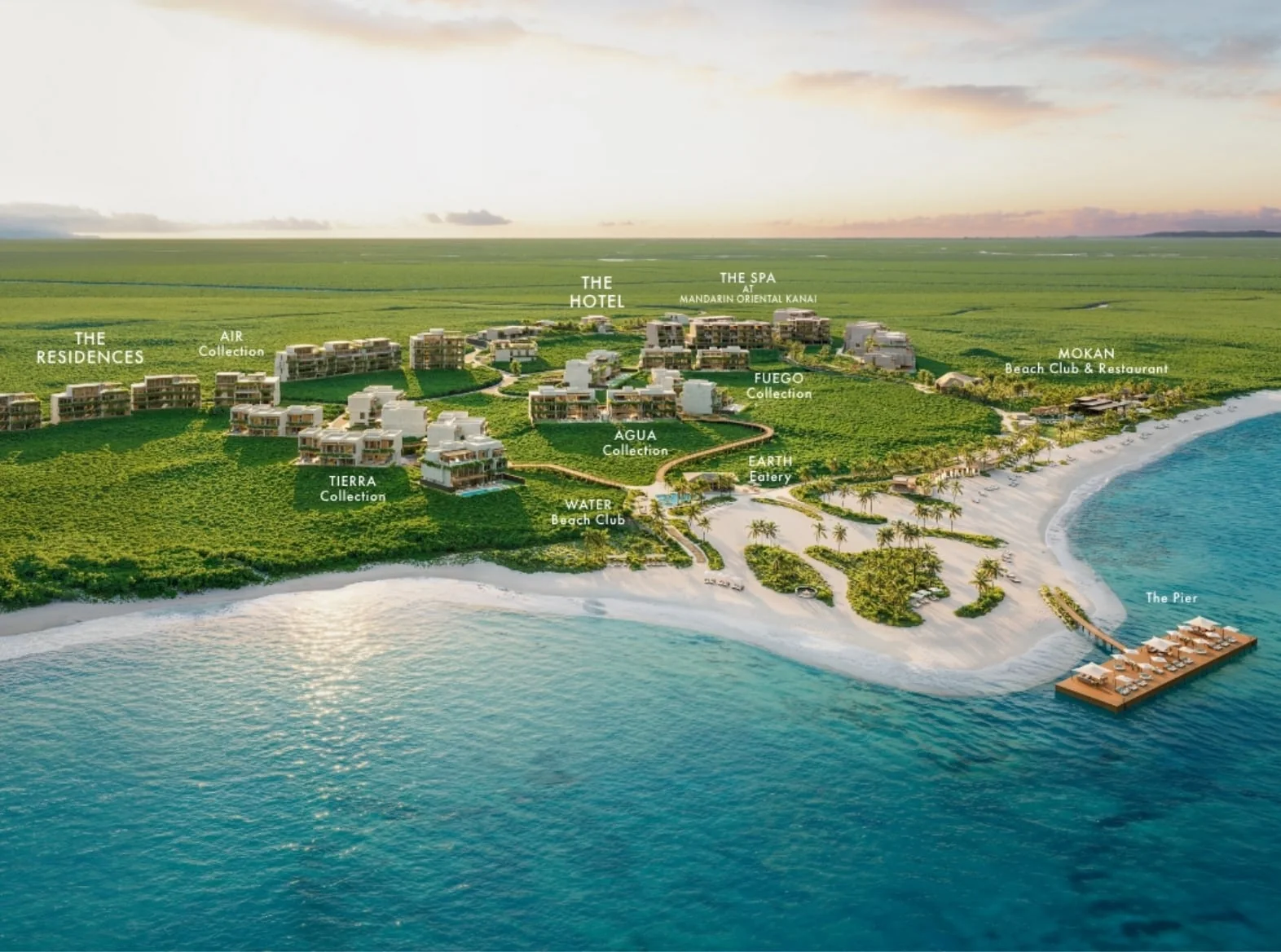
Aerial project rendering supplied by Sun Escape Realty. Labels are part of the original image.
On 24 November 2026, Mandarin Oriental laid the first stone of its new resort and branded residences in Kanai, between Cancún and Playa del Carmen, and residential sales opened the same day. It is a return. The brand ran a resort on this coast before, the Mandarin Oriental Riviera Maya, which opened in February 2008 and closed in 2011. This time it comes back with something it never offered here: 49 private branded residences, ranging from three to seven bedrooms. Published coverage has placed initial pricing at approximately US$4.5 million, although buyers should request a current developer-issued price list. The news matters beyond the project itself, because it confirms something we have been watching for a while. The Riviera Maya is developing at two speeds. The quieter one is built on privacy, service and wellness rather than volume.
The project
The residences come in four collections named after the elements: Aire, with full-floor homes of three and four bedrooms; Tierra, with nine beachfront villas of three bedrooms; and Agua, with the signature seven-bedroom estates. Fuego, a fourth collection, will be unveiled in 2027.
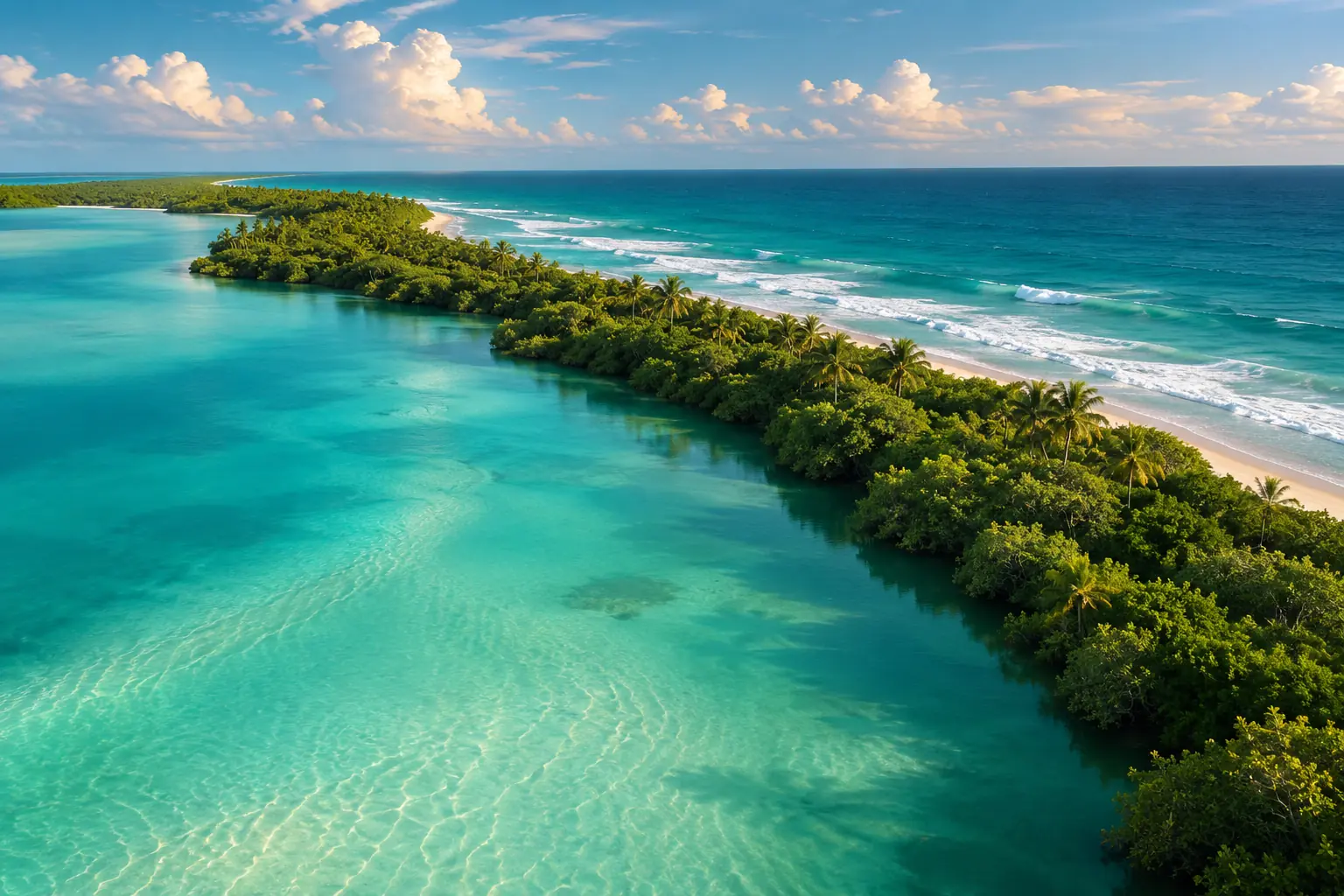
The resort will have 120 rooms and suites, each with a private pool, and is set to open in 2028. The setting is Kanai, a 680-acre masterplan where 91 percent of the land stays preserved jungle, mangrove and coastline, with more than 2,100 feet of beachfront. Kanai is not a new address. It already holds three luxury resorts, Etéreo, The St. Regis Kanai Resort and The Riviera Maya EDITION at Kanai, and Mandarin Oriental is the fourth brand to join them.
Architecture is by Migdal Arquitectos, interiors by William Gray, the luxury hospitality practice of Meyer Davis, landscape by Maat Handasa, the spa by Esrawe Studio, art curated by Bosco Sodi, and the culinary program with chef Grant Achatz and The Alinea Group. The developer is GIM Holdings.
A destination with two speeds
The Riviera Maya is still a mass beach destination, and it will remain one. The large family resorts keep growing. Xcaret, for example, doubled its Hotel Xcaret México from 900 to 1,800 rooms, and plans 600 more, taking it to 2,400. The group is also preparing Xcaret Inn, a budget line for families. That is one speed of the market, and it is not going away.
What is new is the second speed, running alongside it. In the same corridor, low-density enclaves of branded residences and ultra-luxury hotels are taking shape, aimed at a buyer who wants a second home, not a hotel room, and who is willing to pay for privacy and service. Mandarin Oriental is the latest brand to join that lane, but it is not the first.
The St. Regis Costa Mujeres Resort opened in June 2026, and delivery of its residences is underway. According to the developer's September 2026 inventory, 63 of 86 residences were already spoken for. The Ritz-Carlton Residences at Punta Venado, about 15 minutes from Playa del Carmen, brings 127 furnished residences on 180 acres with about 500 meters of beach. Viceroy Residences Playa del Carmen, on Calle 32 Norte, steps from Fifth Avenue, brings 125 residences in its first phase. Thompson Private Residences Puerto Cancún broke ground in October 2025. Faena Tulum adds 147 residences with its Tierra Santa Healing House. And Kanai itself, with four luxury brands sharing one preserved landscape, is the clearest example of the pattern: several operators, one cared-for setting.
These developments are not identical in scale, positioning or ownership structure. What connects them is a growing emphasis on hospitality-led residential experiences, where service, design and access to amenities become part of the proposition. Some buyers are buying a place to live part of the year, others an asset to rent and resell, and the same residence answers those two questions differently.
Wellness is the new luxury
The other thread running through these projects is wellness. SHA Wellness Clinic, a longevity and integrative medicine clinic, is already open in Costa Mujeres, north of Cancún. Xcaret, the Mexican group behind La Casa de la Playa, its ultra-luxury boutique hotel since late 2021, illustrates another dimension of this evolution. While continuing to expand its established resort business, the company has announced plans for a longevity clinic near its existing hotels, expected to open in the second half of 2027. The concept, described as All Health Inclusive, would bring preventive health assessments into the visitor experience.
The Mandarin Oriental spa, designed by Esrawe Studio, follows the same logic. Health, rest and wellness are increasingly prominent in the way developers position these residences. Whether that translates into a measurable purchasing preference is a separate question, but the shift in the product offering is already visible. For the buyer these projects are aimed at, the residence is a place to live well, for part of the year, with everything arranged.
What this means
A first stone is only a beginning. The broader hospitality market also offers reasons for caution. According to Quintana Roo's Sistema de Información Turística, average hotel occupancy in the Riviera Maya declined from 73.66 percent to 68.51 percent between January and August 2025 and the same period in 2026. In Tulum, the decline was sharper, from 70.91 percent to 61.81 percent. These figures do not measure demand for ultra-luxury residences, but they provide important context: new projects and ambitious announcements do not, by themselves, guarantee commercial success.
The challenge ahead will be demonstrating that the market can sustain this growing supply of premium residential inventory.
An increasing number of international hospitality brands are bringing their residential concepts to the Riviera Maya. Their projects place a different emphasis on privacy, design and service, often within carefully planned coastal settings.
What buyers should understand
That change is real, and it still pays to understand what you are buying before you decide.
- A brand name alone does not guarantee the quality of the management, the services in the contract, the rental program or the resale value. Ask what the brand agreement actually includes and how the condominium is run.
- No official price list has been published yet. If a price is quoted to you, ask which list it comes from and its date.
- Delivery dates in pre-construction are estimates. The date that counts is the one in your contract.
- Ask for the service charges and the rental program in writing before you decide.
- Confirm the exact residence count, the collection, and what is included. Only one collection has a published unit count so far, the nine villas of Tierra, and no residence sizes have been published.
Whether this new wave will translate into lasting residential demand remains to be seen, but the direction is clear. The Riviera Maya used to sell a place to escape. It is starting to sell a place to live exceptionally well, and the next chapter will be defined by the quality of the places they build and the experiences they sustain.